PATAGONIA PROVISIONS INTEGRATION
Bringing food into the core Patagonia.com commerce experience — balancing mission-driven storytelling, new product modeling, and cross-functional complexity across an 8-month end-to-end engagement.
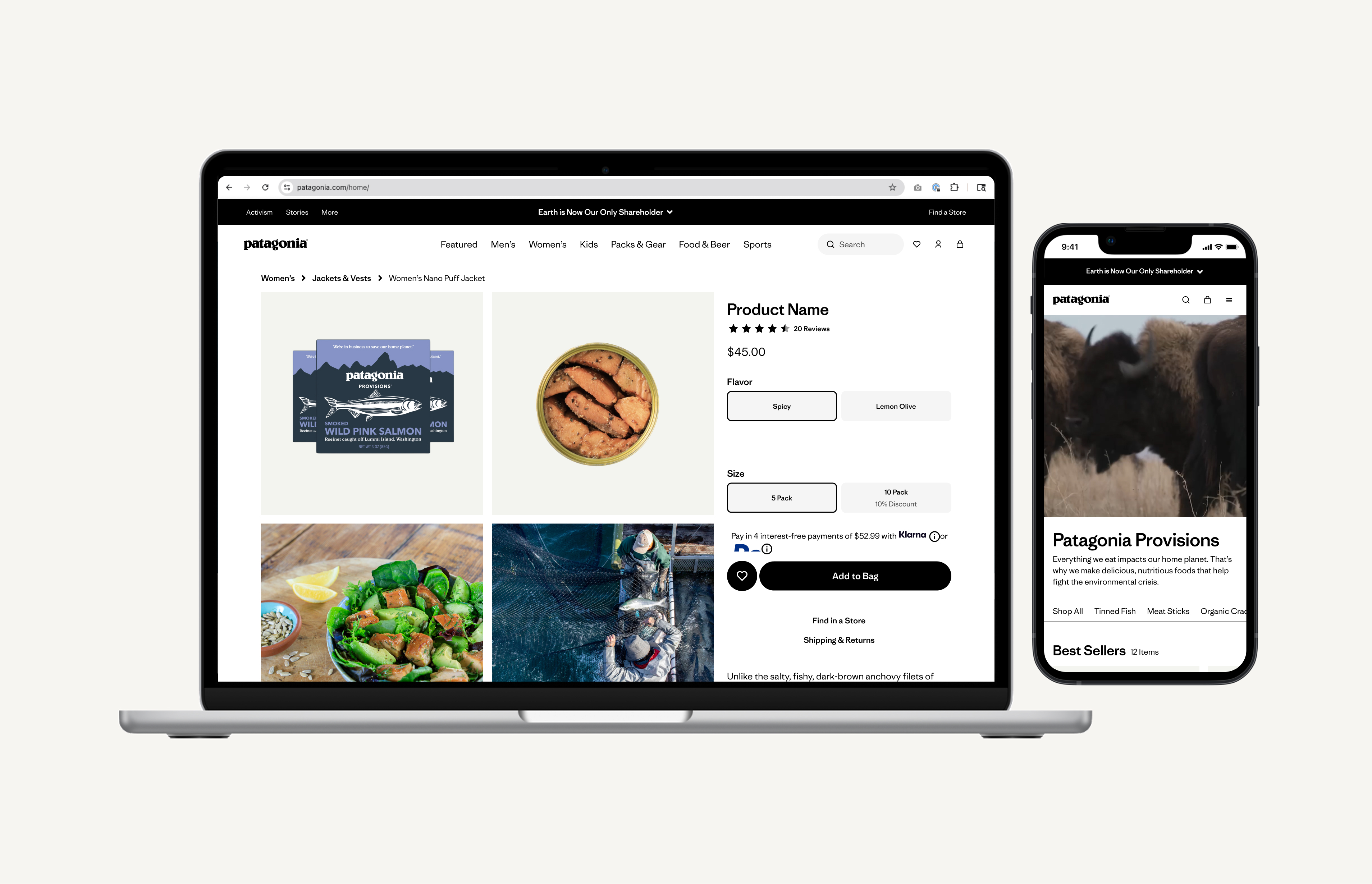
THE BRIEF
Integrate Provisions into Patagonia.com for the first time — without losing what makes it distinct
Patagonia Provisions had existed as a standalone ecommerce business at patagoniaprovisions.com. The goal was to migrate it into Patagonia.com — bringing food into the core commerce experience — while ensuring the integration would support a scalable, profitable business model and preserve Provisions' unique brand identity and mission-driven storytelling.
The project required the integration to clearly communicate why Patagonia is in food, position Provisions credibly within the core product assortment, and do so in a way that was technically feasible and operationally sustainable across the combined business.
PROBLEM STATEMENT
Patagonia Provisions has operated as a standalone ecommerce business with significant awareness gaps and high operational costs — limiting its ability to scale. Meanwhile, Patagonia.com lacks a food presence despite the brand's deep commitment to regenerative agriculture. The two businesses exist in separate digital ecosystems, creating friction for customers, redundant overhead, and a missed opportunity to connect Patagonia's mission to something as fundamental as what we eat.
“To me, Provisions is more than just another business venture. It's a matter of human survival.”
- YVON CHOUINARD
In September 2025, the New York Times profiled Patagonia Provisions and the question at the heart of this project: Patagonia Changed the Apparel Business. Can It Change Food, Too?
BUSINESS REQUIREMENTS
During a three day on-site, I worked alongside Product, Technology, and the Provisions business team to map 15 distinct business requirements spanning navigation, PDPs, search, cart/checkout, order history, and more — each with defined success criteria and cross-team dependencies.
Key Business Requirement Areas for UX:
- Navigation integration
- PDP requirements for food storytelling
- Handling of non-sellable products like beer
- Mixed cart functionality
CUSTOMER PERSONAS
Two distinct target consumers to anchor design decisions
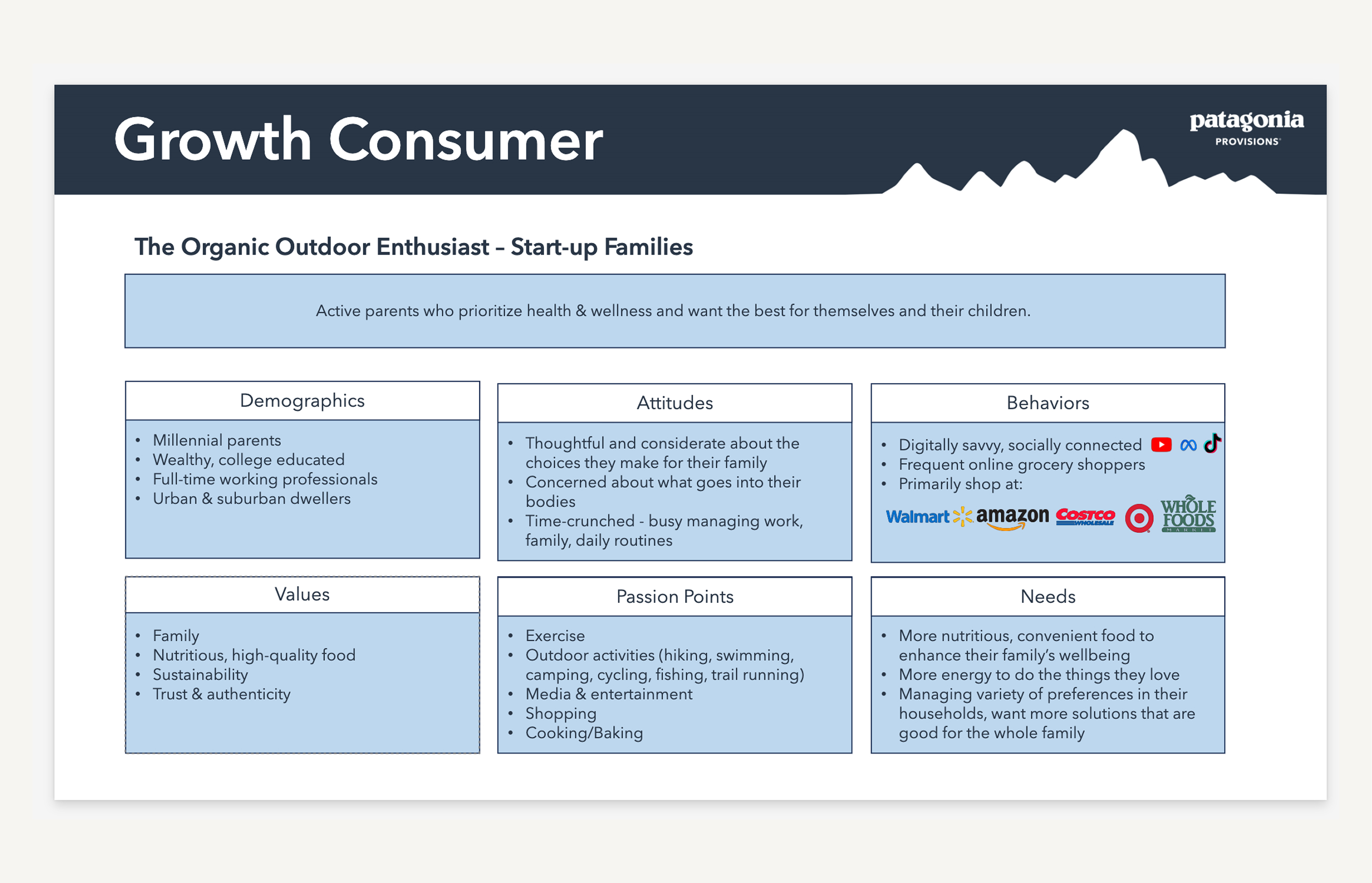
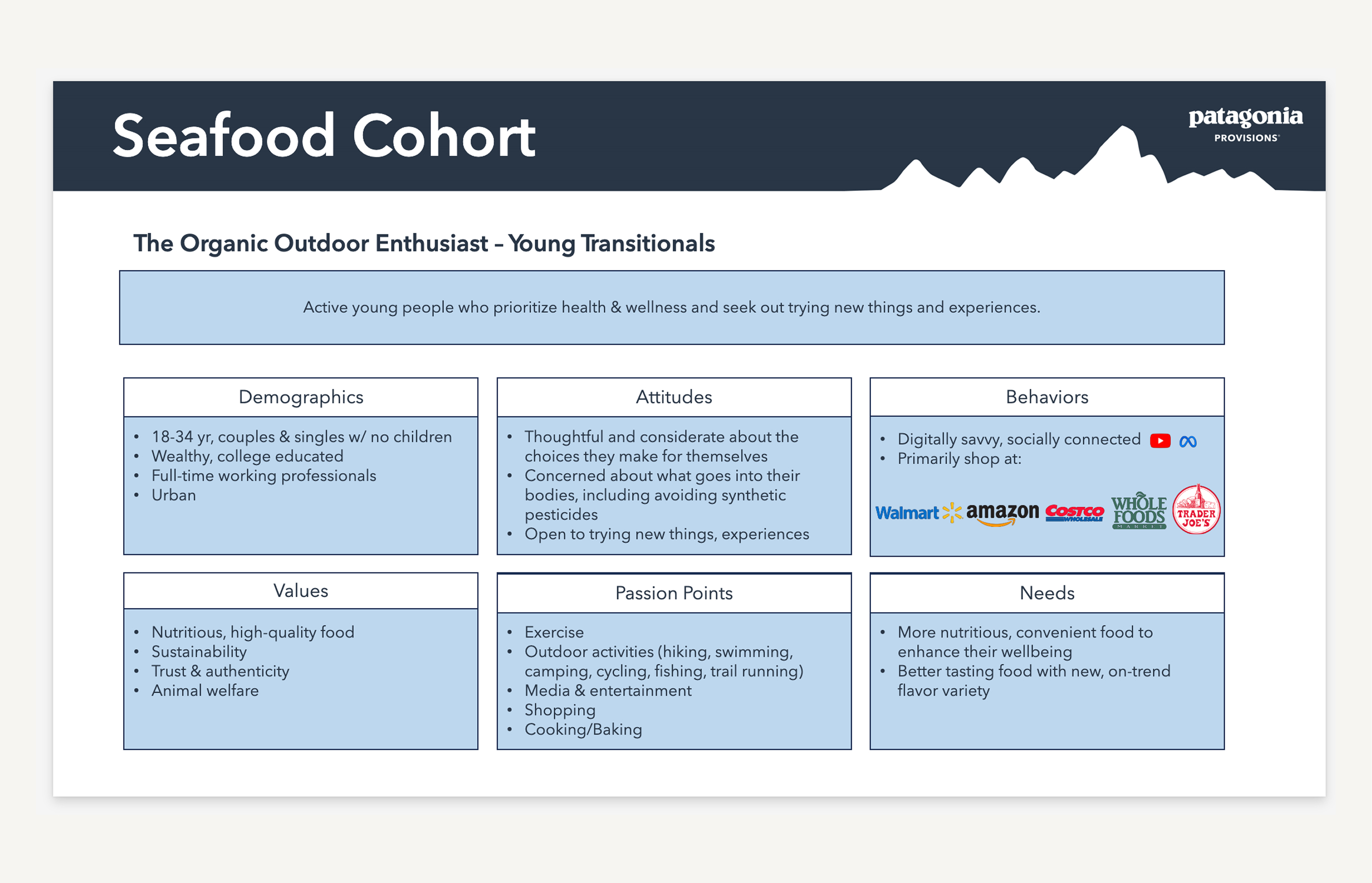
The target customer was defined as the “Organic Outdoor Enthusiast” — people who buy Patagonia apparel and purchase 40%+ natural/organic groceries. Two personas were shared by the Provisions team to help support the integration work.
COMPETITIVE RESEARCH
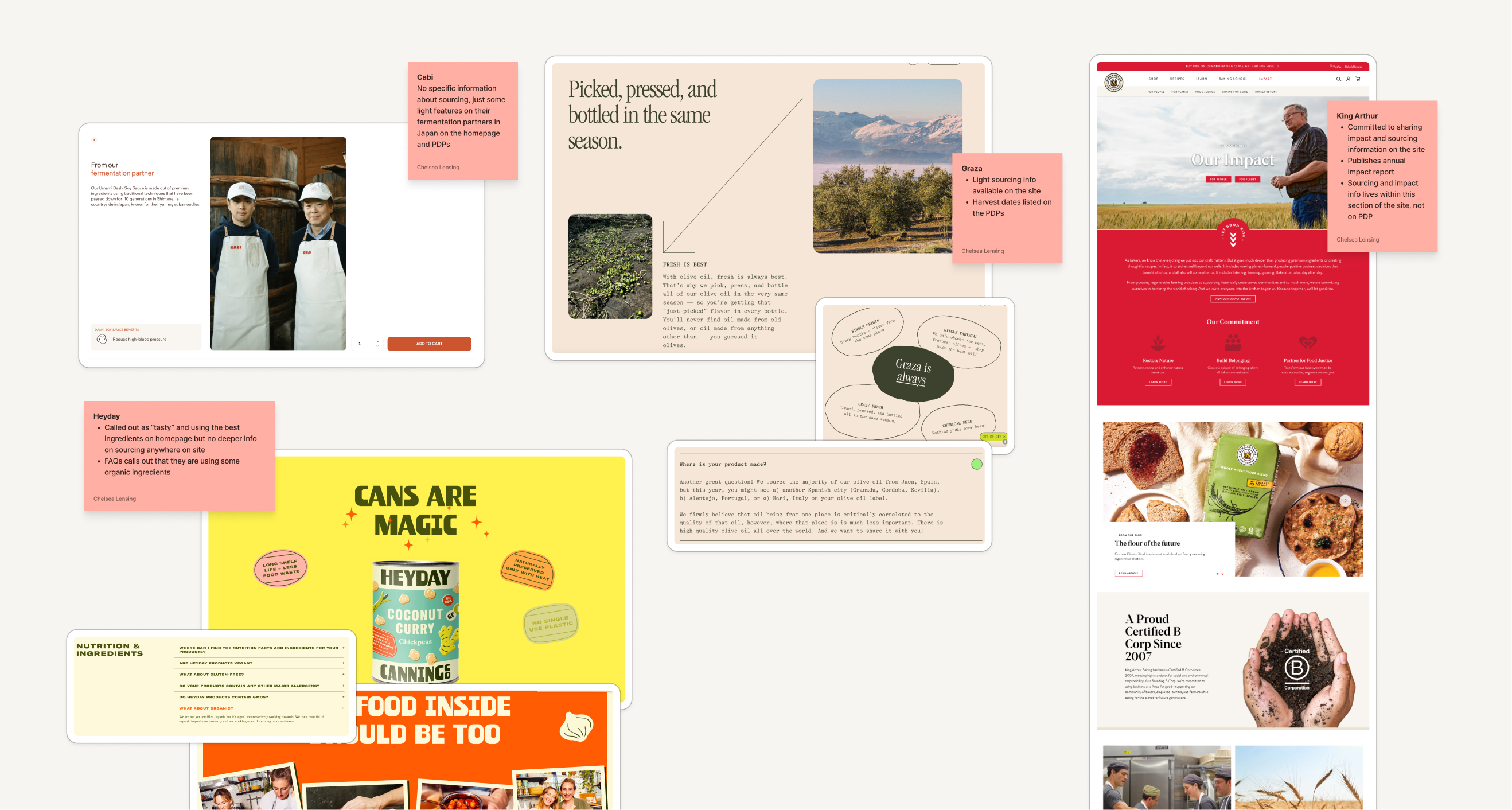
To establish a design foundation grounded in industry patterns and emerging best practices, I conducted a competitive landscape analysis across direct food-brand comparators. Brands analyzed included Graza, Heyday Canning Co, Ayoh!, Fishwife, CABI, King Arthur — evaluated across four surfaces directly mirroring Provisions' design scope: Home/Landing Page, PLP, PDP, and Recipes.
Key patterns that directly informed design decisions: food-brand PDPs consistently prioritize lifestyle photography before product specs; recipe content is a high-trust bridge to purchase; brand story modules work best when integrated into the product page rather than siloed in a separate “about” section.
INFORMATION ARCHITECTURE
An integration structure designed for discoverability, education, and future scale
Provisions had to live meaningfully within Patagonia.com's existing taxonomy while establishing its own browsable identity. The IA covered Provisions' integration across the full site — navigation entry points, landing page structure, PLP hierarchy, PDP content architecture, search behavior, store locator, cart/checkout flows, account/order history and added stories and recipes.
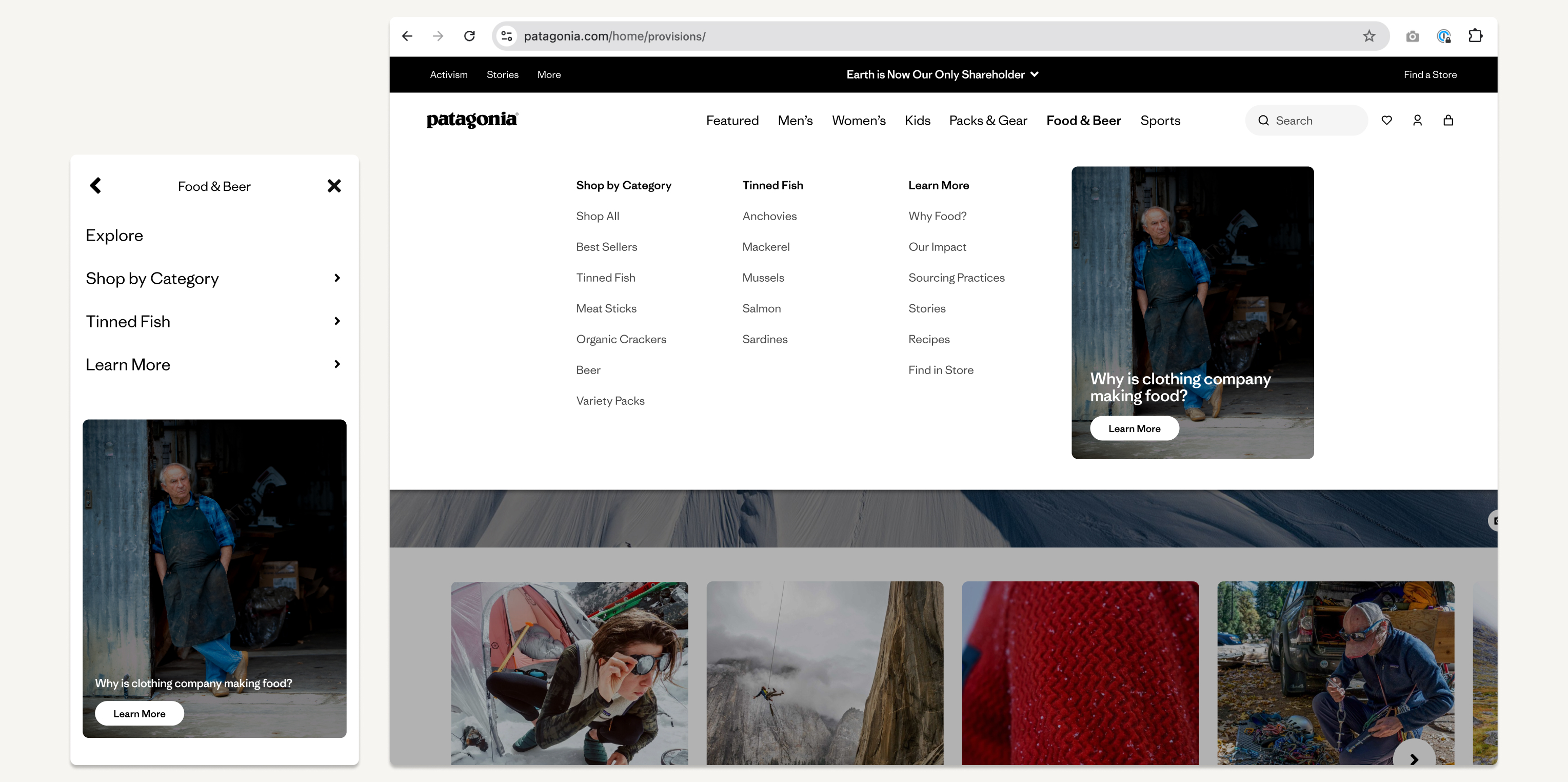
Key structural decisions: Provisions would live under a dedicated “Food & Beer” category within Patagonia.com's primary navigation, with the Provisions landing page serving as the brand entry point. PLPs would use Patagonia's existing product listing infrastructure with Provisions-tailored filter logic. PDPs required a new content model to support recipe content, sourcing story, and multi-pack variants.
LO-FI WIREFRAMES
Seven surface areas wireframed across the full customer journey
Lo-fi wireframes were developed and iterated on based on cross-functional feedback. The wireframe set covered the full scope of Provisions integration surfaces:
- Landing Page: brand storytelling, best sellers, category navigation, recipe entry points
- Product Listing Page: Provisions category browsing with food-appropriate filter logic
- Navigation & Discovery: search integration
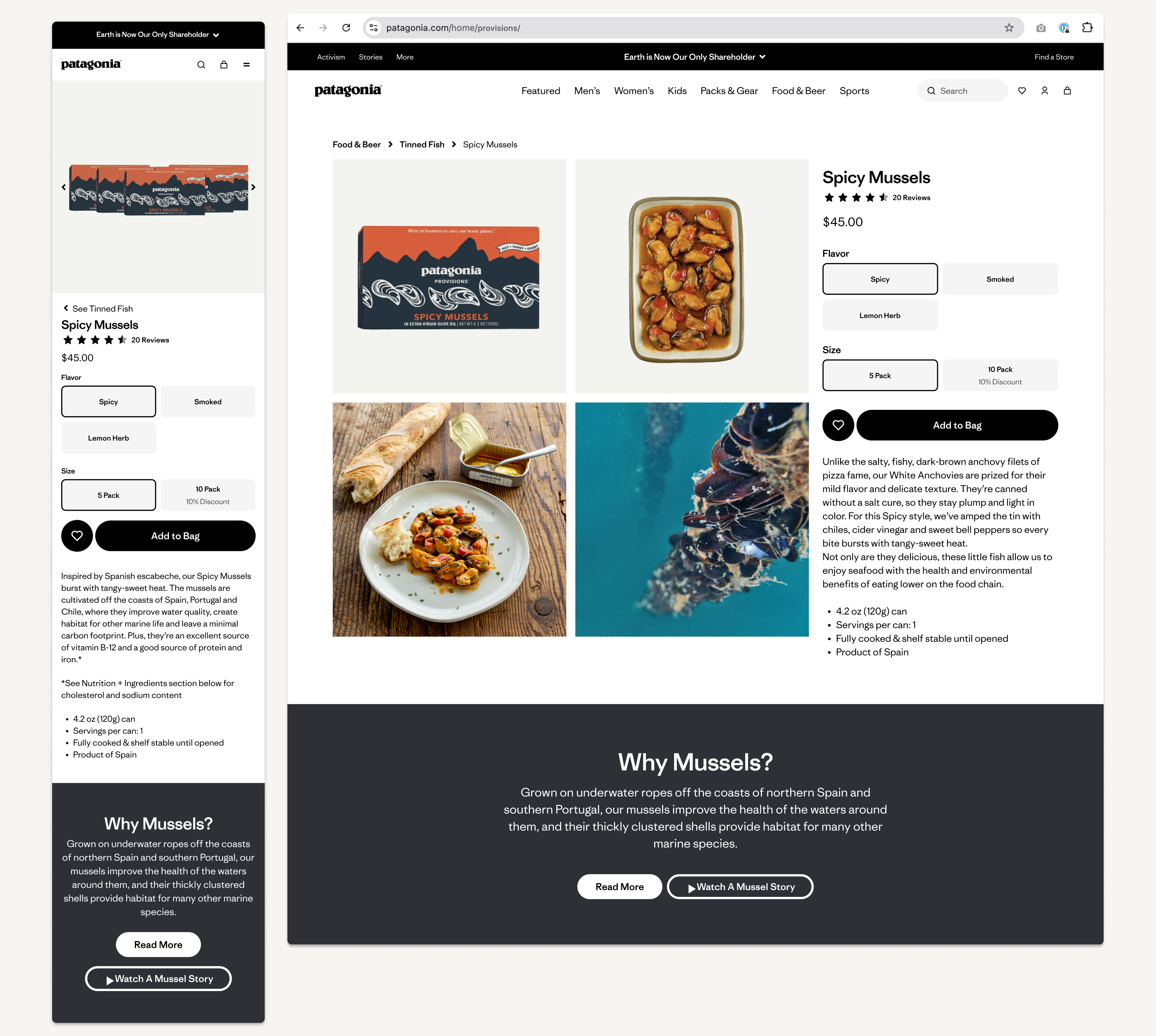
- Product Detail Page: food product detail page with recipe content, sourcing story, multi-pack variants
- Store Locator: where to find Provisions products in retail
- Cart & Checkout: mixed cart experience (food + apparel), food-specific checkout edge cases
- Account / Order History: order visibility and return flows for Provisions purchases
STORYTELLING
Designing for "why" across every surface
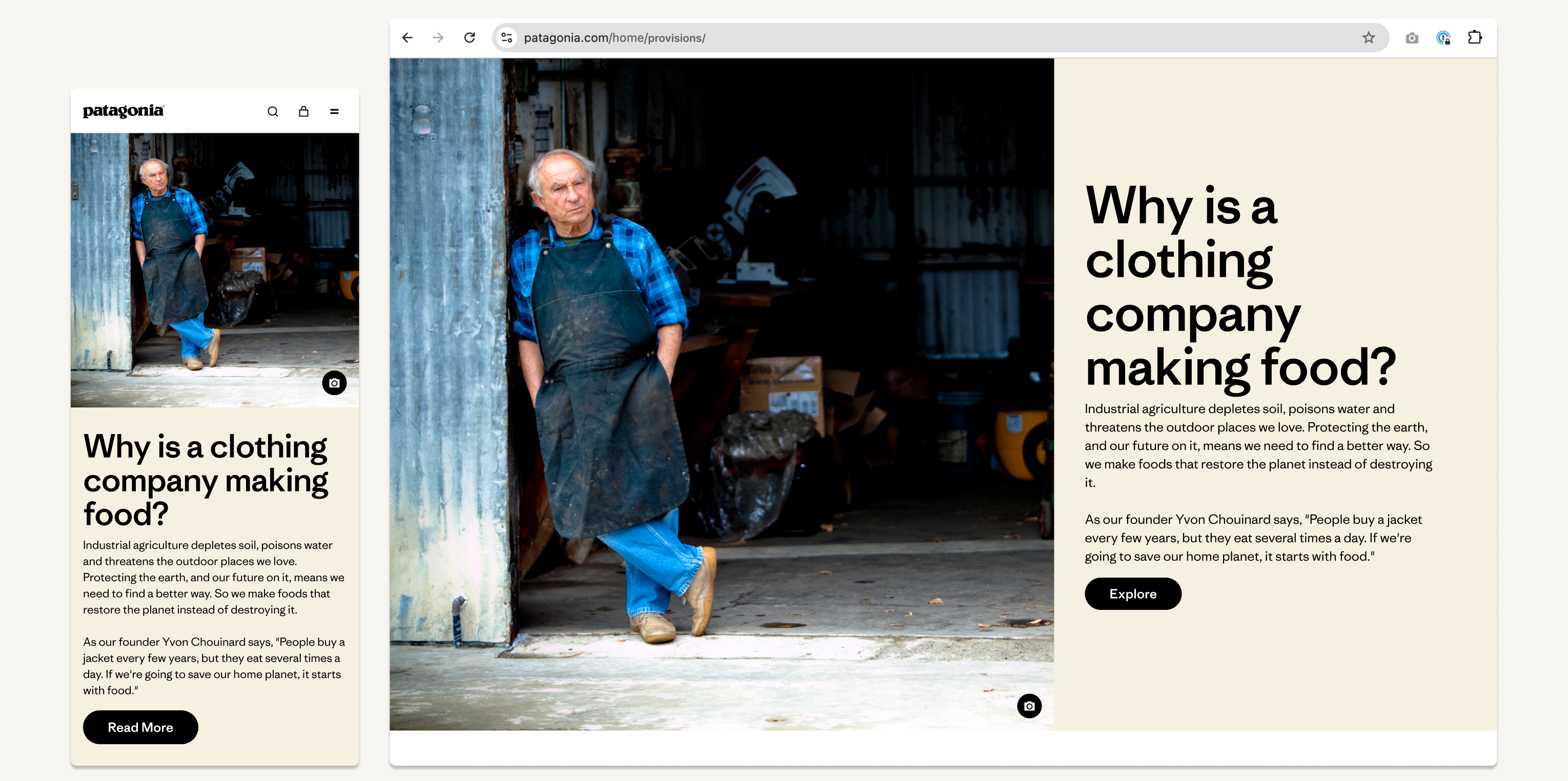
A clear directive from Ryan, Patagonia's CEO, shaped the design from the start: the integration couldn't just sell food — it had to explain why Patagonia is making food, and why each specific product exists.
I translated this into intentional storytelling touchpoints across three surfaces:
FINAL DESIGN
The Provisions integrated experience — commerce and mission in balance
The final design brought together discovery insights, IA decisions, and cross-functional requirements into a cohesive Provisions experience within Patagonia.com. I created a high-fidelity prototype to conduct walkthroughs with executive leadership — including the VP, CEO, CTO, and CFO — securing final sign-off and buy-in to move the project into development.
View PrototypeHANDOFF & SPECS
From design to development — specs built for a complex integration
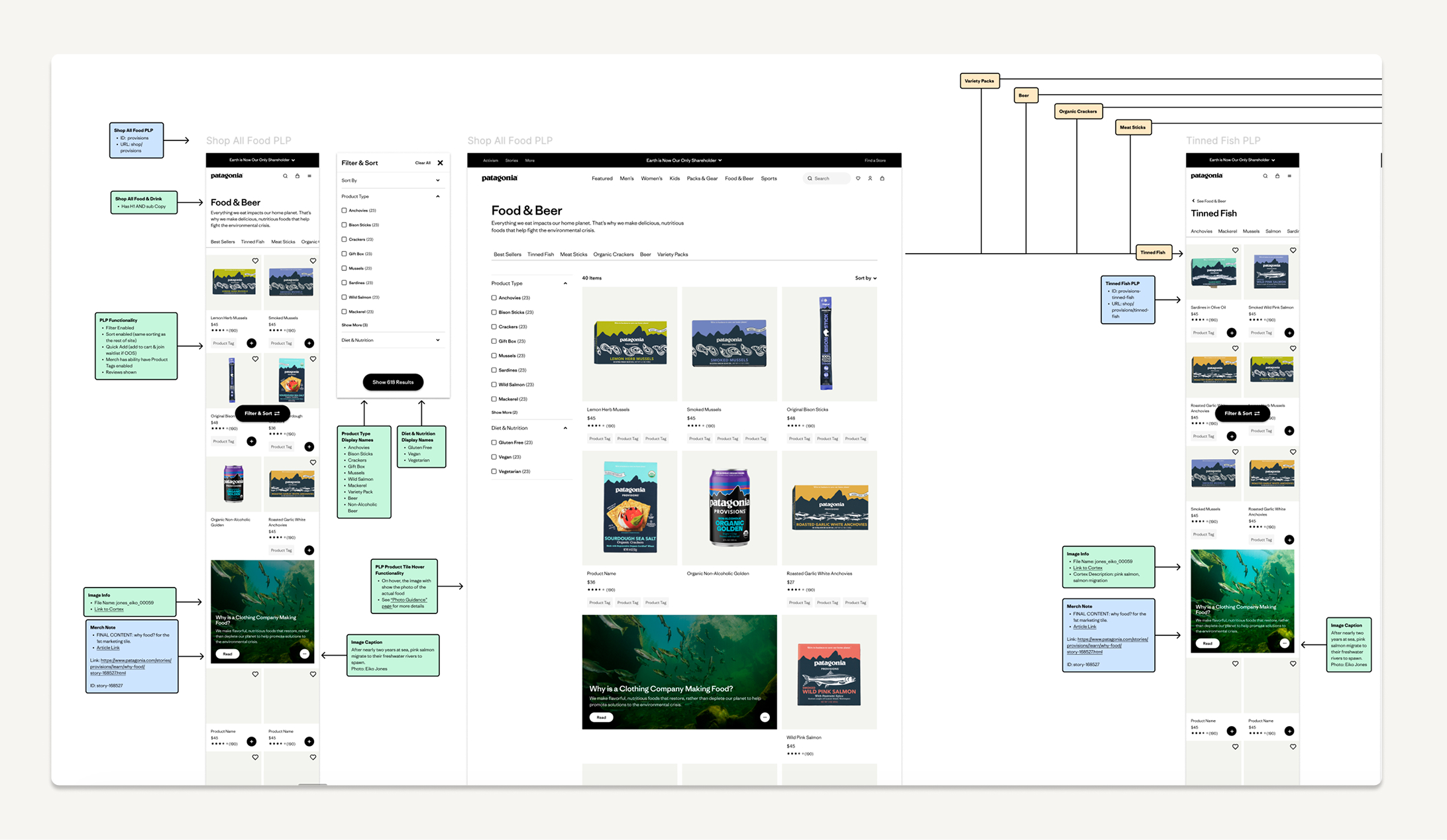
The Figma spec set for Provisions was one of the most comprehensive I've produced — covering a new product category across the full purchase journey, integrated into an existing design system that was not originally built with food in mind.
The spec documentation included all new component states, interaction annotations, and product-type-specific variations (e.g., multi-pack variants, non-sellable beer SKU handling, mixed cart edge cases).
QA CYCLE
Sustained collaboration through the full development and QA cycle
Rather than stepping back at handoff, I stayed involved through the build to review the staging experience against design specs. This included identifying a critical product image cropping and zoom issue that was causing poor customer experience — caught and resolved before launch through close collaboration with the development team and a third-party image editing partner.
BUSINESS IMPACTS
A foundation for Provisions to grow from $2M to $5–8M annually
The Provisions integration will go live on March 18, 2026 — marking the first time food products will be available for purchase within the core Patagonia.com experience. The integration establishes a scalable commerce foundation for Provisions' long-term growth within the Patagonia digital ecosystem.
*Results will be added post launch.